faq

ANSWERS TO MANY
COMMON EVANS NPG™ & NPG+™ QUESTIONS


A GENERAL LIST OF FREQUENTLY ASKED QUESTIONS
general q+a
BUICK GN & T SYSTEMS SPECIAL INSTALLATION INFORMATION
buick gn + t
CHEVROLET/PONTIAC LT 1 & LT 4 SPECIAL INSTALLATION INFORMATION lt1 + lt4 engines
READ OUR ONLINE INSTALLATION GUIDE / TECHNICAL REFERENCE tech ref
  to the end


The following FAQ was written to address some common concerns and questions regarding our coolant. However, with our newer NPG+ and NPG-R, many older issues have been eliminated. NPG + is our recommended coolant. As most of our site was setup to support NPG, it will take some time to properly adjust the pages to outline the greater benefits, enhanced operational dynamics, and ease of installation of NPG+. In short, NPG+ has superior cooling ability to even our own NPG, which is, in itself, superior to all other coolants. For that very reason, we will continue to support NPG for the few applications that may wish to utilize the unique characteristics of NPG. However, NPG+ is easier to use as it does not in most cases require changes to existing cooling system components. NPG+ is priced identically with NPG and is the preferred choice for all installations except for those uses that specifically prohibit the ingredient ethylene glycol. (E.g., some motorcycle race tracks prohibit ethylene glycol but have no such restriction on the use of propylene glycol.). For more information, please visit our NPG+ page, our Catalog page or call us toll free at 888-990-2665.

Question: What is NPG+ as compared with NPG?
Answer:

NPG+ contains a non-toxic blend of glycols rather than just propylene glycol. It exhibits improved heat transfer and viscosity characteristics as compared with NPG, while retaining all of the non-aqueous operational advantages of NPG. Both products are inhibited against corrosion. NPG+ is our recommended coolant.


Question: Are all Evans Waterless Coolants lifetime coolants?
Answer:

No. Only Evans NPG and NPG+ are considered lifetime coolants. NPGR is currently a 5-year coolant when used for street or a 1-year coolant when used for racing. NPGR coolant life depends on the amount of racing. NPGR has the lifetime additive package but has not been available long enough to receive a lifetime rating. A lifetime rating will be given to NPGR once enough history is collected.


Question: What can I add to Evans Waterless Coolants in case of an emergency?
Answer:

In the past we have suggested propylene glycol or ethylene glycol based regular anti-freeze in small quantities as an emergency substitute for Evans Waterless Coolants. Research has shown that the potential of contaminating your Evans Waterless Coolant increases when adding uninhibited coolants due to what is called "black coolant." Black coolant is an industry wide problem when the coolants are contaminated, because of the multiple variations on the market today of regular coolants. Evans suggests adding nothing except an Evans Waterless Coolant or Evans Prep Fluid to your Evans Waterless engine cooling system.


Question: What does it mean, Evans Waterless Coolants do not freeze? A freezing temperature is provided.
Answer:

Evans NPG, NPG+, and NPGR freezing temperature is determined by the viscosity change to where the coolant will not flow through the system at the state temperature. This state of super cooling causes the coolants to contract rather than expand like water-based anti-freeze making storage below the rated freezing point possible. Evans Waterless Coolants do not freeze like water, rather they gels at their freeze points, beyond that it crystallizes. Because Evans Waterless Coolants contract when it gels instead of expanding like water when it freezes, our coolants will not cause engine damage in severe cold weather.


Question: NPG has the lowest freezing point of all the coolants, why can't I use NPG in extreme cold?
Answer:

The coldest suggested operating range for each coolant is:
NPG: -79° F freeze protection, +32° F coldest suggested operating temperature. NPG is the thickest of Evans Waterless Coolants and requires modifications for use in lower temperature ranges.
NPG+: -40° F freeze protection, -20° F to -30° F coldest suggested operating temperature with proper warm up or block heater. NPG+ is a year-round coolant and the only coolant for diesel engines.
NPGR: -10° F freeze protection, +32° F coldest suggested operating temperature. NPGR was originally developed for racing only and is NOT suggested for cold weather operation. NPGR can also be used on the street in copper brass radiators due to the lowest viscosity.


Question: Why do Evans Waterless Coolants change color?
Answer:

Color change is another misunderstood characteristic of Evans Waterless Coolants. All Evans Waterless Coolants will change color. The identifying dyes are designed to be mixed with water. Because of the lack of water in an Evans Waterless cooling system and the heat cycles, the coolants go through an aging process that darkens the coolants over time. The change in color is also attributed to the amount of dirt particles in the system when converted to Evans Waterless Coolants. The higher viscosity of NPG, NPG+ and NPGR at room temperature keeps dirt particles suspended thus adding to the darkening appearance. The color change in no way effects the coolants abilities to transfer heat. The number of heat cycles and their severity determines how fast the color change occurs. At some point all the Evans Waterless Coolants will look dark brown.


Question: I have Magnesium and / or Aluminum components are Evans Waterless Coolants safe?
Answer:

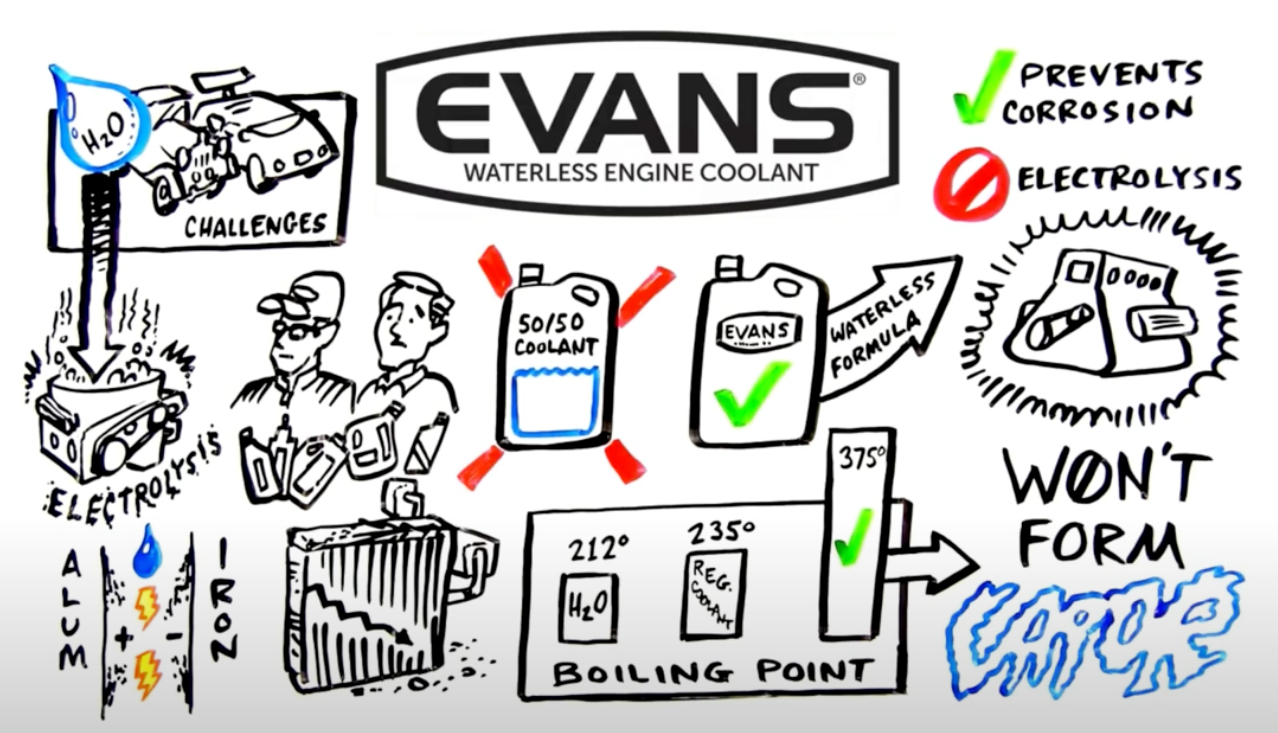
YES. Evans waterless coolants are compatible with all metals, because there is no water in our coolants and - no water should be used with Evans coolants - there is no electrolysis. We also eliminate corrosion - as long as the coolant is installed properly and all residual water is removed prior to filling with either NPG+ or NPGR.


Question: Which coolant is the correct coolant for off road motorcycle and ATV use?
Answer:

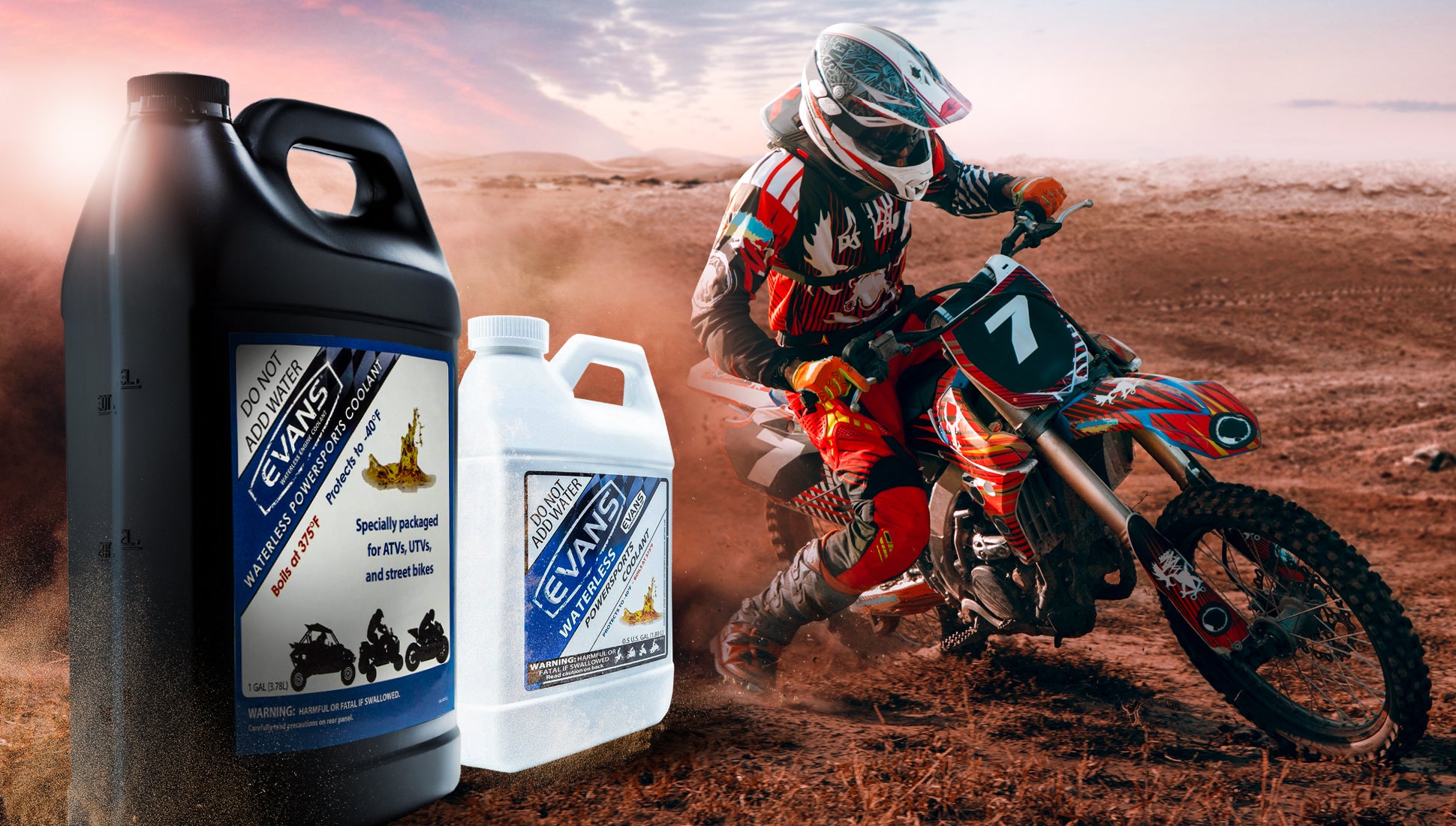
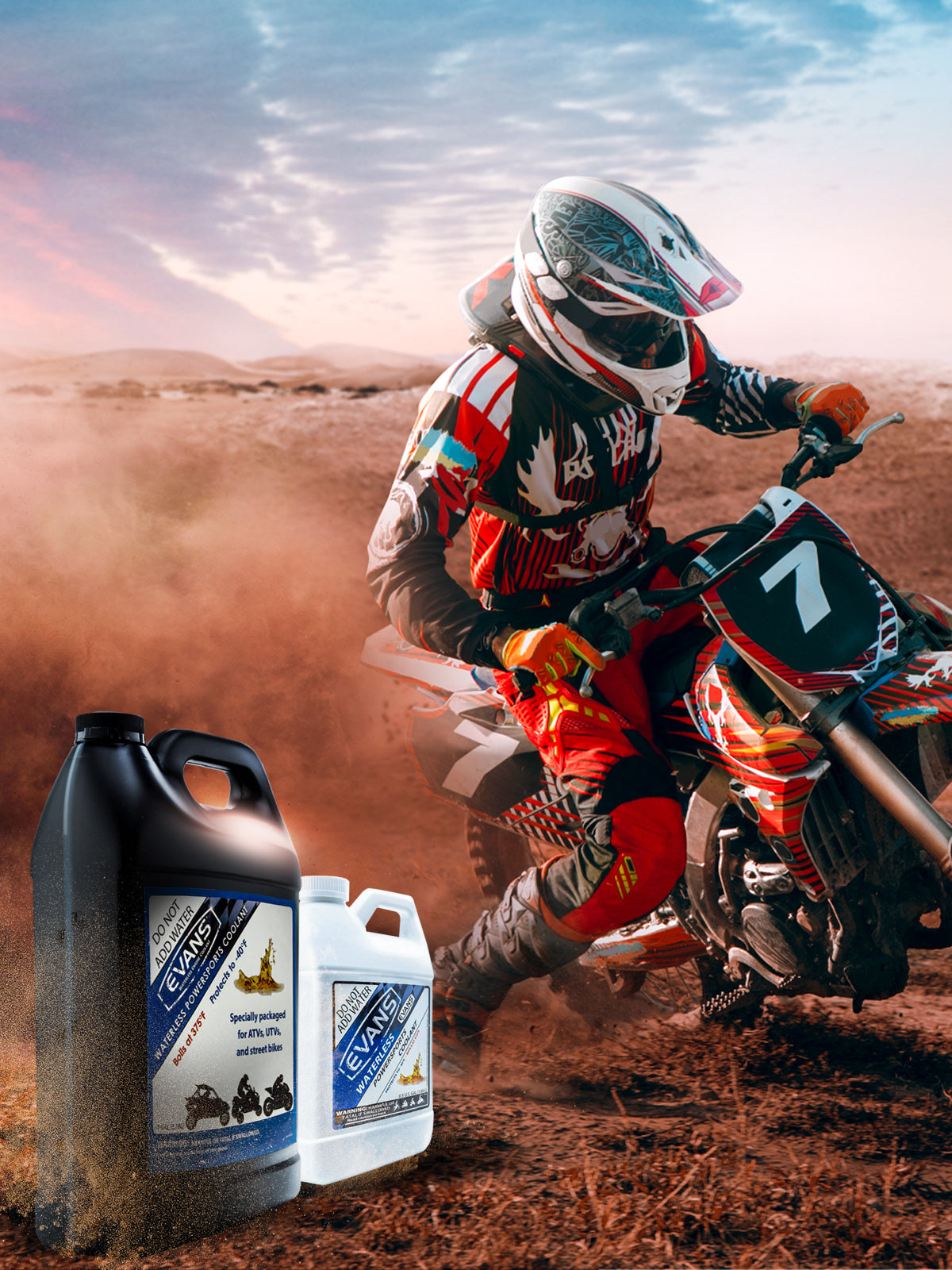
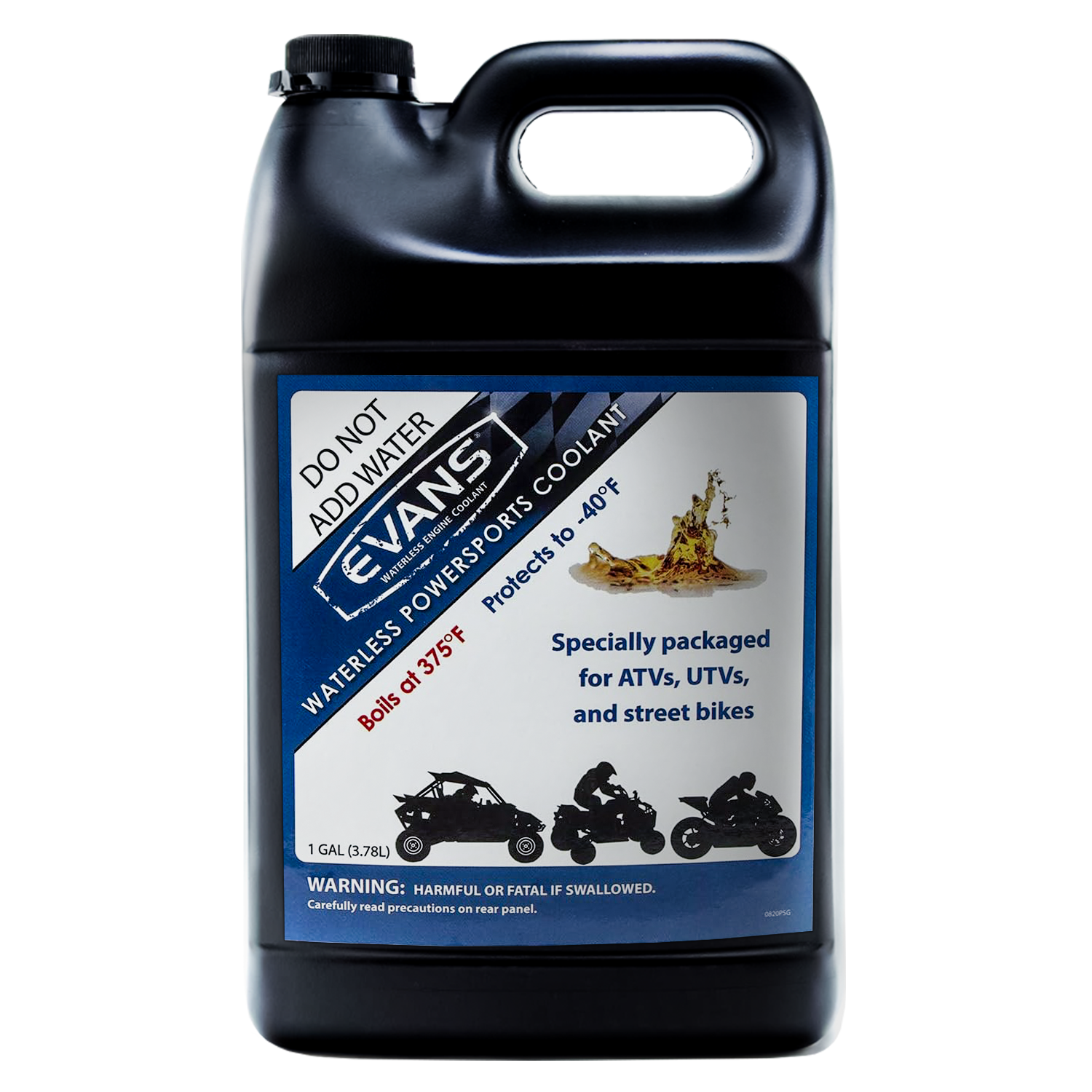
NPG+ or NPGR are the only 2 recommended waterless coolant for these applications. NPG+ can be used year round and is suggested for bikes and ATV either used or stored in cold weather areas. NPGR offers excellent heat protection in high temperature use - and is designed for seasonally use only.


Question: Do I need a Zero or low pressure radiator cap with NPG+ ?
Answer:

NO. You may use your standard radiator pressure cap. In fact, we recommend a 7lb cap to keep NPG+ from absorbing water from the atmosphere. Some users found they could smell coolant, again a 7lb cap eliminated the issue. NPG+ will still cool your system with industry leading efficiency. Of course if you'd like to run a low pressure or even zero pressure system, you will need to purchase a low pressure cap or modify your existing cap. Please consult our tech pages or instruction guide (or call us) before modifying your existing cap!


Question: What is the practical meaning of the improved heat transfer and viscosity characteristics of NPG+?
Answer:

In most cases changes to cooling system components (pumps, radiators, pressure caps, etc.) are not necessary to use NPG+.


Question: When should NPG+ be used instead of NPG?
Answer:

NPG+ is preferred to NPG in all cases except where the ingredient ethylene glycol is specifically prohibited (e.g., use at certain race tracks).


Question: Evans offers a line of radiators, pumps, thermostats, and other specialty items for use with its cooling systems. Why would I need any of these items if I use NPG+?
Answer:

In most cases you would not. However, for applications requiring the optimization of the cooling system for increasing spark advance or increasing compression ratios in race cars, for example, the Evans ancillary products are appropriate. The Evans pumps, radiators, and other components improve cooling by increasing the coolant flow velocity through the engine and radiator.


Question: What are the basic DIFFERENCES between non-aqueous propylene glycol (NPG) and standard coolants?
Answer:

Standard coolant is comprised of ethylene glycol and water in equal parts, each represents half of total volume. Our Non-Aqueous Propylene Glycol, NPG, as the name suggests, contains NO water.


Question: Where can I buy EVANS Products?
Answer:

We have a growing dealer base where NPG+ can be purchased. You may also buy direct from EVANS using our online order form or by calling us toll free at 888-990-2665. Have a favorite speed shop or auto parts store? Ask them to carry EVANS products!


Question: Is NPG a "DRAIN AND FILL" product?
Answer:

If your system already has the effective flow rates needed to run with NPG, the answer is YES. Unfortunately, most vehicles, with the possible exception of large heavy duty engines and motorcycles, need some sort of modifications to establish the necessary flow rates required for effective operation with NPG. However, in most cases NPG+ (not to be confused with our older NPG) is a drain and fill product.


Question: How much Evans Coolant will I need for my system?
Answer:

While these numbers may vary slightly; Small Block engines typically require a minimum of 4 gallons while Big Block engines require at least 6 gallons.


Question: What determines the changes needed to convert to a NPG cooling system?
Answer:

In general, many stock cooling systems can be quickly rendered NPG ready by the introduction of a lower pressure radiator cap and a higher flow thermostat. Additional Evans components may be required as determined by the size and horsepower of the engine, the local ambient temperature, current radiator design (tube sizing and the diameters of the inlet & outlet), coolant pump efficiency, and even driving style. Evans Cooling Systems has cooling hardware packages specifically designed for the adaptation of NPG on medium and large block Chevies.


Question: What radiator size do you recommend for use with NPG?
Answer:

For systems up to 300 HP without A/C a radiator configuration with 4 rows 1/2" tube copper / brass. Systems 300 to 400 HP with A/C a radiator configuration with 2 rows 1" tube aluminum. System operating over 400 HP need a minimum of 2 rows 1.25" tube aluminum.


Question: What will the COOLANT GAUGE read when using non-aqueous propylene glycol (NPG) coolant?
Answer:

The normal operating range of standard coolant (ethylene glycol and water) is 160°F to 230°F with some cooling systems able to function reasonably well up to 240°F; although as this extreme temperature level is reached, the engine will almost always operate with ever less power and response until it boils over and stalls. At approximately 330°F the coolant warning light would normally light up; a cooling system operating with the more modern needle gauge would indicate higher coolant temperatures as they developed. As NPG contains no water, coolant temperatures can rise to higher levels without a negative impact on the performance of the engine. In fact, with NPG in many cases the activation of the coolant warning light represents a false warning as NPG works very well at 330°F. Gauges may show the needle at 330°F, a temperature probably located in the red, but again, no concern is warranted with NPG coolant.

to the top

Question: Will the use of NPG increase my engine's HORSEPOWER?
Answer:

With some explanation the answer is YES! Operationally detonation (pre-ignition) saps horsepower. Detonation is caused by the presence of excessive water vapor in the engine cooling jackets alongside the cylinders. And again, as NPG has no water, there is no vapor and detonation is eliminated allowing the engine to recapture improved fuel economy, emissions, and horsepower. Also, this NPG cooling flexibility allows the engine to effectively control the added heat generated by the additional power realized through the development of higher cylinder compression and/or more aggressive spark timing. Remember, more power means more heat radiated into the engine's metals and fluids. Historically, racing cars have utilized NPG coolant to effectively thermally manage their engine running with up to a 16.5 to 1 compression ratio.


Question: What impact does NPG coolant have on the power needed to run an engine COOLANT PUMPS?
Answer:

The power (parasitic loss) needed to operate a coolant pump running with NPG is increased over that which is needed to drive pumps working with standard coolant. However, this parasitic loss is minimal when compared to the horsepower gains (see above). And, pumps utilizing more efficient impellers and housing designs can decrease this power loss significantly, often times bringing parity with operation on standard coolants.


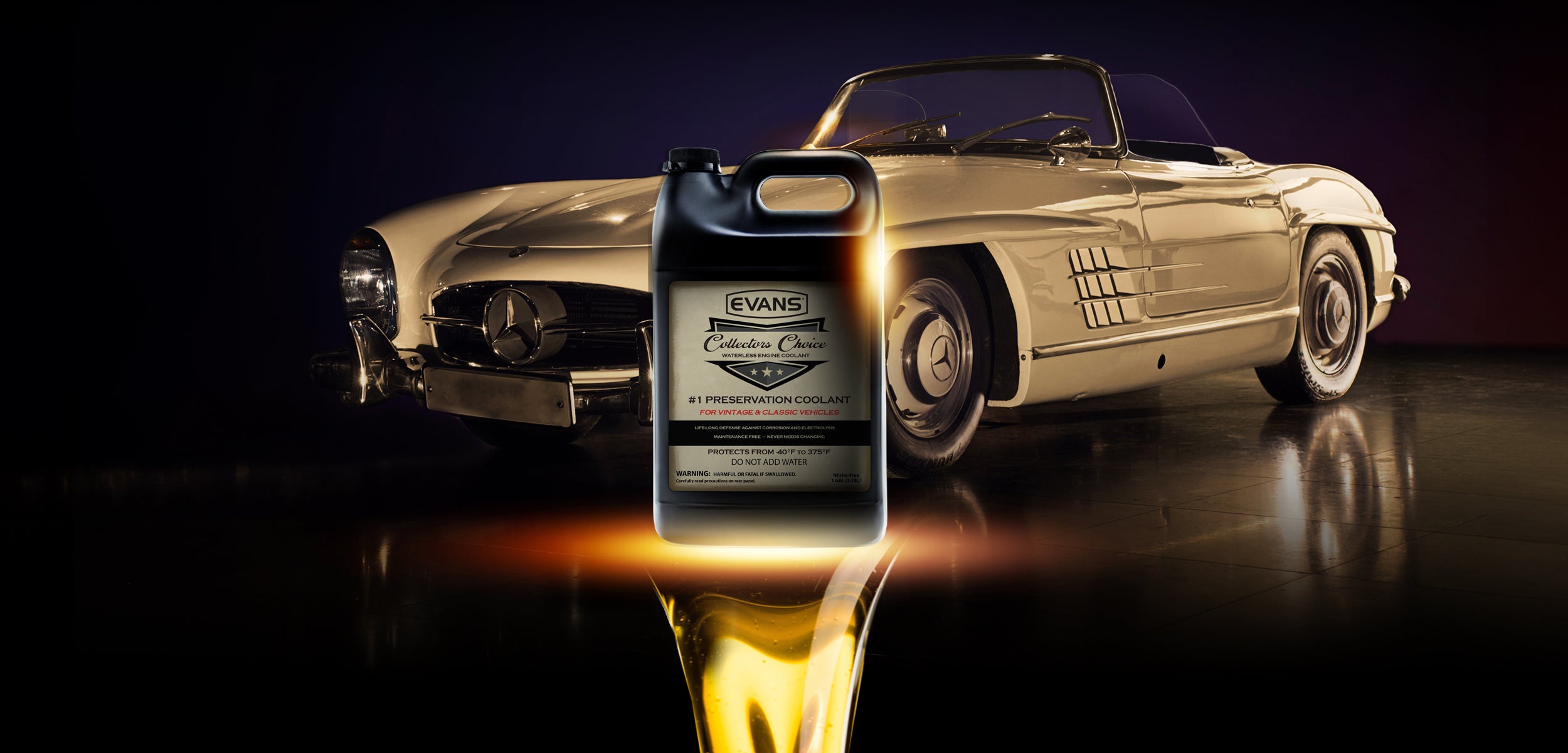
Question: I have an Antique or Vintage collector car and want to utilize the non-corrosive no pressure ability of NPG, will I need to alter my system to do so?
Answer:

No. Because of the low horsepower of most vintage cars, NPG can be used in most applications without modification to the existing engine and does not require changing the radiator.


Question:

What are the CHEMICAL AND PHYSICAL PROPERTIES of NPG, especially as compared to water and standard coolant.

Answer: For information and comparisons covering these areas please see the NPG Properties section of this web page.


Question: Does the use of NPG cooling technology improve EMISSIONS and FUEL ECONOMY?
Answer:

In CARS & TRUCKS the elimination of water from the coolant prevents the occurrence of detonation which, in turn, improves the efficiency of the air/fuel burn. This increased burn efficiency can be measured in improvements in emissions, fuel economy, and, as mentioned above, power. In TRUCKS additional fuel economy can be realized by adjusting engine fan control to activate at higher temperatures; thereby decreasing the amount of parasitic loss (fuel/horsepower needed to drive this engine fan). Note that additional fuel savings can be developed by operating with more advanced spark timing (MBT).

to the top

Question: Does the engine block need to be drained? ..Why?
Answer: YES! This is the most common mistake when converting to NPG. NPG is not mixed with anything. The Engine Block, Radiator and Heater Core MUST BE EMPTY. The block alone holds 1/2 the capacity of the cooling system liquid. Draining the radiator in the average American V8 leaves 2 gallons of coolant in the engine block.


Question: If the radiator is drained and the engine ran for a few minutes will the pump suck the block dry and the remaining coolant evaporate?
Answer: NO! The problem is that the average pump is located high in relation to the engine block. With the engine running the pump pushes coolant into the block. Once the radiator has been drained the coolant level drops to below the pump outlets which are higher then the level of the block, leaving the rest of the block full. If the coolant was a 50/50 mix the antifreeze will not evaporate and the remaining water needs to reach 90°F to start evaporating. Running the engine to achieve this can cause more damage than good. Look for the block drain plugs.


Question: Do all engine blocks have water jacket drain plugs, if so where are they located?
Answer: No, not all engine blocks are equipped with drain plugs. If your engine block has them they will be found on the side very low in the casting and close to the oil pan mounting surface. Normally they will be a variation of a pipe tread with a square or hex head.  V8 & V6 blocks will have 2 one on each side while inline 4 & 6 cylinders will have 1 drain plug. For engines that do not have drain plugs the HOT purge procedure must be followed in the EVANS NPG instruction manual.

to the top

Question:

In order to increase COOLANT FLOW, the Evans manual suggests eliminating the thermostat and plugging the flow of coolant through the bypass. Will the resultant increase in coolant flow decrease the effectiveness of the RADIATOR?

Answer:

NO. Slower coolant flow through the radiator increases the incidence of temperature drop (T), however, this same slower rate also allows for more heat to be added as coolant flows through the heads. Conversely, higher coolant flow rates through the radiator generate less heat loss with less heat being absorbed with flow in the heads. Important: If the thermostat is removed, the bypass must be plugged, or it will scavenge coolant (flow) away from the radiator which will result in the cooling system running warmer than normal.


Question: What is the function of the THERMOSTAT BYPASS?
Answer:

Operating in conjunction with the bypass circuit, the thermostat, when closed, prevents the coolant from running through the radiator by directing flow through the bypass and heater circuits. The sole intent here is to increase the speed of engine "warm up." As the thermostat opens, ever more coolant is allowed to flow through the radiator, an event which allows the radiator to initiate control of and ultimately thermally balance the cooling system.


Question: Where is the THERMOSTAT BYPASS located?
Answer:

The specific location of the bypass thermostat is often a puzzle as each vehicle seems to have its own design and location. Sometimes the bypass circuit runs through hoses located outside the engine while others have the bypass located in the block or even the head. Newer engines often incorporate the bypass with thermostat into a rather exotic cast and machined aluminum front cover which can also house the coolant pump. In any case, if the engine thermostat and its associated bypass circuit remains a mystery, the engine's manual should serve as the reference of last resort or call the Evans tech phone line at 610 323 3114 for assistance.


Question: What are the the boil / freeze points of EVANS Waterless Coolants?
Answer:
NPG+   NPGR   NPG
         
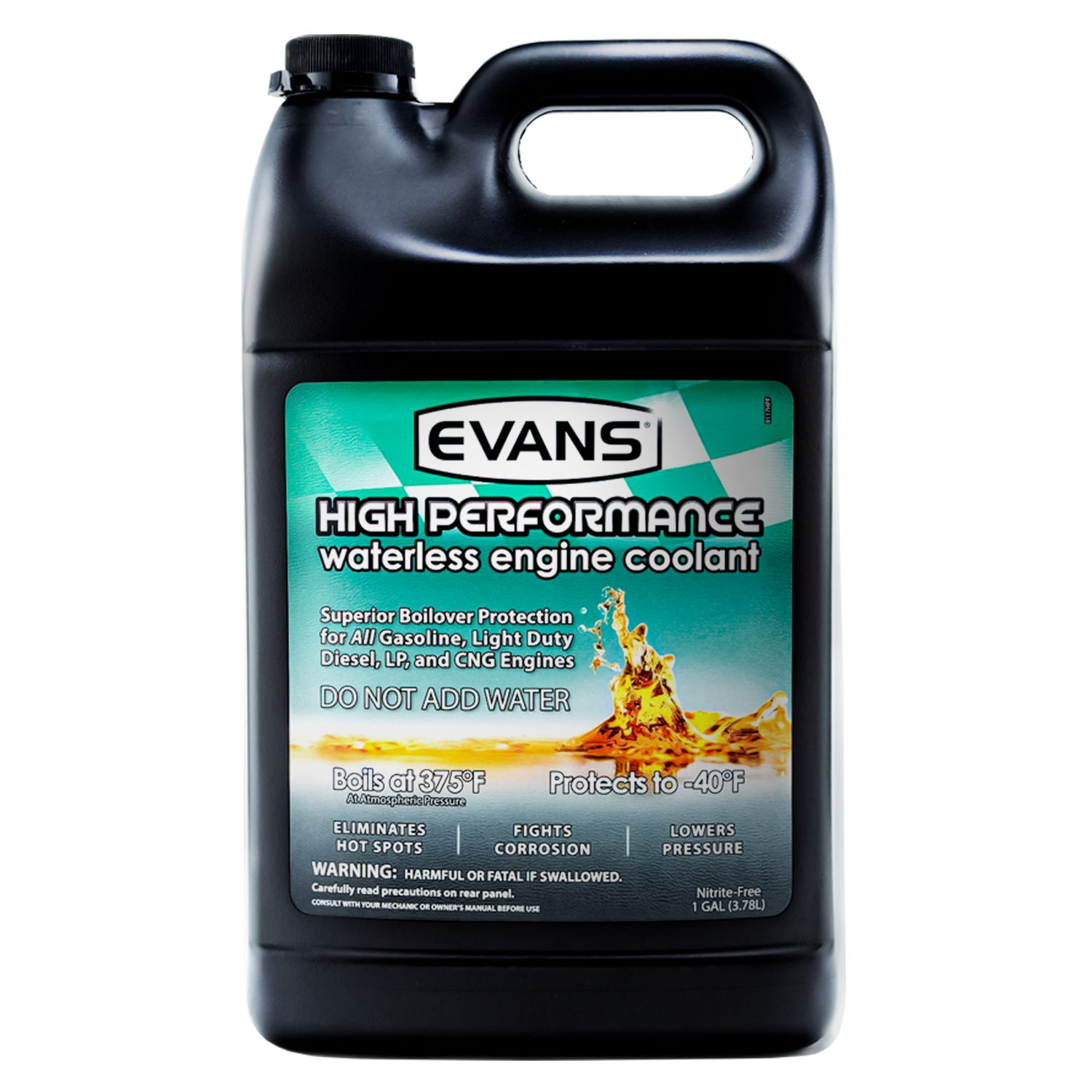
Boils 375°F @ 0 psi   Boils 400°F @ 7psi   Boils 369°F @ 0psi
Freezes -40°F   Freezes -10°F   Freezes -79°F
Viscosity 2.3cp @ 212°F   Viscosity 2.0cp @ 212°F   Viscosity 2.8cp @ 212°F
Surface Tension 44dyn/cm   Surface Tension 46dyn/cm   Surface Tension 36dyn/cm


If you could not find an answer to your specific question, please read through the various information in our Technical info page.  A number of general topics along with more technically oriented information and tables are provided therein.  Also provided are several illustrations and diagrams for clarification.  Additionally, many answers may be found by reading through the information and reviewing the diagrams provided in our Instruction manual and Reference guide.  If your question is not answered in any of these areas, please feel free to call our tech support line at 610 323 3114.  We will be continually updating this FAQ so please check back frequently.


A GENERAL LIST OF FREQUENTLY ASKED QUESTIONS
general q+a
BUICK GN & T SYSTEMS SPECIAL INSTALLATION INFORMATION
buick gn + t
CHEVROLET/PONTIAC LT 1 & LT 4 SPECIAL INSTALLATION INFORMATION lt1 + lt4 engines
READ OUR ONLINE INSTALLATION GUIDE / TECHNICAL REFERENCE tech ref
  to the top
 

Acrobat Download You will need the Adobe Acrobat Reader to view and print the various Evans Cooling Systems documents available on this site. Click icon to download the latest version.
Tech Ref Download Download our technical reference / installation guide in Adobe PDF format. Within the reference are complete installation instruction and answers to many technical and procedural questions.
back
reload

This page is part of a framed web site. Click the button to load the site from the intended starting point.
Copyright © 2009 Evans Cooling Systems, Inc.
Page last revised 08/14/2008